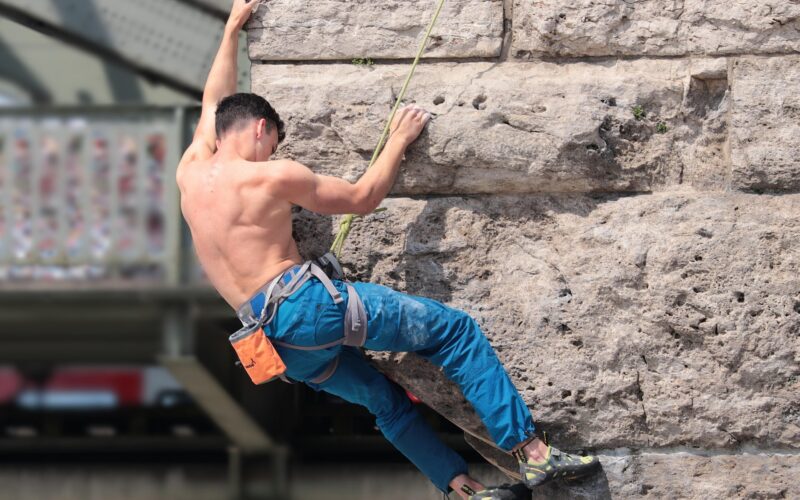
For many people, the idea of trust exercises conjures up awkward images of falling backwards into the arms of colleagues or navigating a blindfolded obstacle course in a stuffy conference room. While these activities might break the ice, they rarely forge the deep, instinctual bonds that truly solidify a partnership. To build genuine reliance, you need stakes that feel real. You need a challenge that demands total focus and communication. This is where rock climbing comes in, transforming the abstract concept of trust into a physical, tangible reality suspended thirty feet in the air.
When you step into a climbing gym, the noise of the outside world fades away, replaced by the slap of hands on resin holds and the sharp commands of belayers. Climbing is often perceived as a solo pursuit—man against mountain—but the reality is quite different. It is inherently a partnership. The climber relies entirely on the person holding the rope below. This dynamic strips away pretence. There is no room for ego when you are clinging to a wall by your fingertips; you simply have to trust that your partner has you. This immediate reliance accelerates the bonding process in a way few other activities can match.
The mechanics of reliance
The technical aspect of climbing is built around the belay system. As the climber ascends, the belayer manages the rope, taking up slack and locking off in the event of a fall. It sounds mechanical, but it is deeply psychological. For the climber to commit to a difficult move—a dynamic leap or a precarious balance on a tiny foothold—they must banish the fear of falling. This fear can only be overcome if they have absolute faith in their belayer. Knowing that someone is watching your every move, anticipating your struggle, and ready to catch you creates a powerful sense of security. It is a silent contract: "I will keep you safe so you can push your limits."
Communication is the bedrock of this relationship. Before leaving the ground, partners perform safety checks on each other’s harnesses and knots. This ritual establishes a baseline of mutual care. Once on the wall, communication shifts to concise, vital exchanges. "Slack!" "Take!" "Watch me!" These commands must be given clearly and acted upon instantly. Miscommunication has immediate consequences, teaching partners to listen actively and respond with precision. Over time, this heightened level of attunement translates off the wall, fostering better listening skills and a greater ability to interpret non-verbal cues in everyday interactions.
Learning to let go
Perhaps the most profound lesson climbing offers is learning how to fail safely. In climbing, falling is not just a possibility; it is a necessary part of progress. To get better, you must try moves that are currently beyond your ability, which means you will fall. For many, the fear of failure is paralysing. However, a supportive belayer changes this narrative. When you fall and are caught softly, hanging in mid-air, you realise that failure is not fatal. Your partner is there to lower you down or encourage you to try again. This shared experience of vulnerability and support builds resilience, teaching partners that it is safe to take risks because they have a safety net.
The trust built in the gym often transcends the climbing walls. The vulnerability required to admit you are scared or stuck, and the reassurance received from a partner, creates an emotional intimacy that is hard to replicate. You see each other in raw, unguarded moments—struggling, sweating, swearing, and celebrating. You learn how your partner handles stress and how they offer support. Do they shout encouragement, or do they offer calm, quiet advice? Understanding these emotional responses deepens your connection, providing insights that strengthen your relationship in other areas of life, whether that be in the workplace or a personal friendship.
Scaling new heights together
Ultimately, rock climbing is a metaphor for any strong partnership. It requires a balance of independence and interdependence. The climber must do the work of ascending, but they cannot do it without the support of the belayer. Success is shared; the summit is only reached because two people worked in sync. By swapping roles—climber becomes belayer—you also learn empathy. You understand the weight of responsibility and the need for vigilance. In a world that often prizes individual achievement, climbing reminds us that we reach our highest peaks not in isolation, but through the strength of our connections.